

Anemones and Clownfish
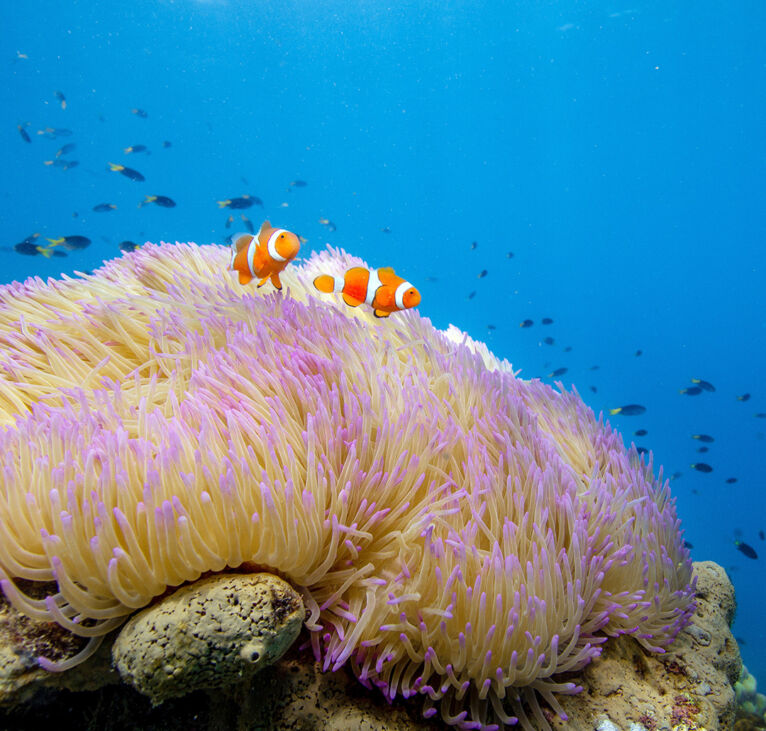
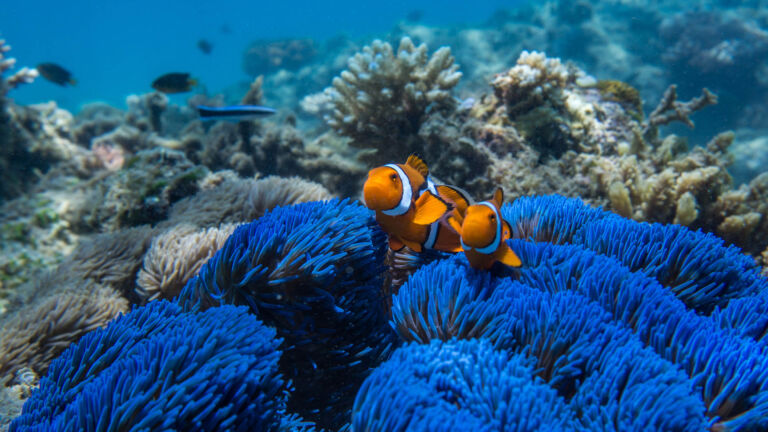
Anemonefish, more commonly known as Clownfish, and sea anemones have a unique symbiotic interaction. The fish are impervious to the anemone’s tentacles’ sting, which gives them a unique safe haven from predators.
The clownfish helps the anemone in exchange for this safe haven by luring in other fish and shrimp, which are then stung and consumed by the anemone. Frankland Islands is home to two rare jewel-blue anemones containing clownfish, which you can see right off the beaches on the north and west sides of Normanby Island.
Sea Turtles
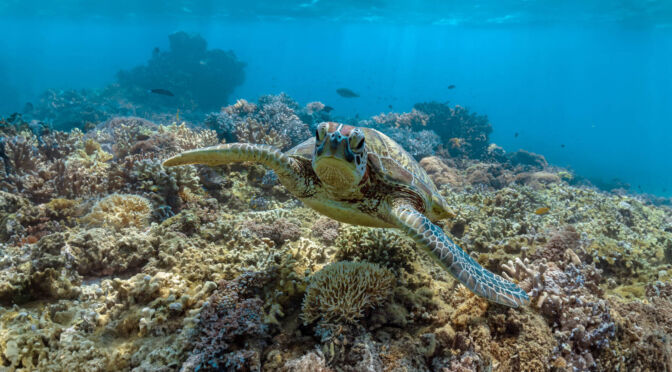
The waters of the Great Barrier Reef are home to six of the world’s seven sea turtle species. The islands are home to the green turtle (Chelonia mydas) and the hawksbill turtle (Eretmochelys imbricata) which We see on almost every trip! Snorkelling with sea turtles is an amazing experience, floating alongside them as they swim and feed.
Manta Rays
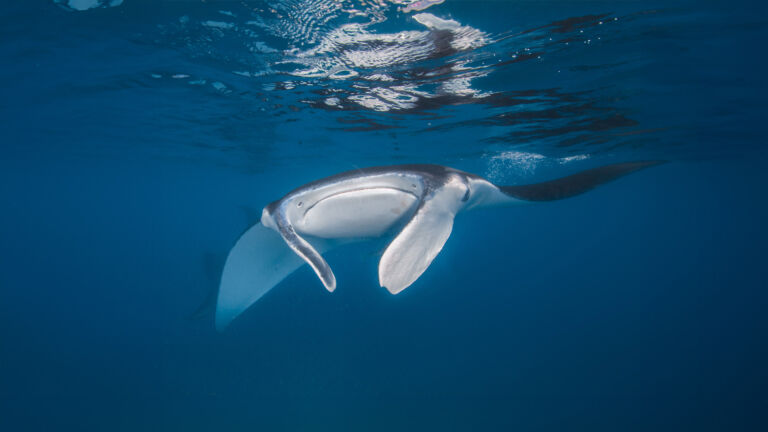
The name ‘Manta,’ which means blanket or cloak in Spanish, is given to these large, flat, and uniquely shaped fish because of their striking look. The Manta Ray may be found across the Great Barrier Reef and is among the world’s largest fish, measuring up to 7 metres in length from wingtip to wingtip. Despite their massive size, manta rays eat minuscule plankton, the tiniest animals in the ocean. Manta rays, unlike other rays, lack a stinging barb and are therefore completely harmless to people.
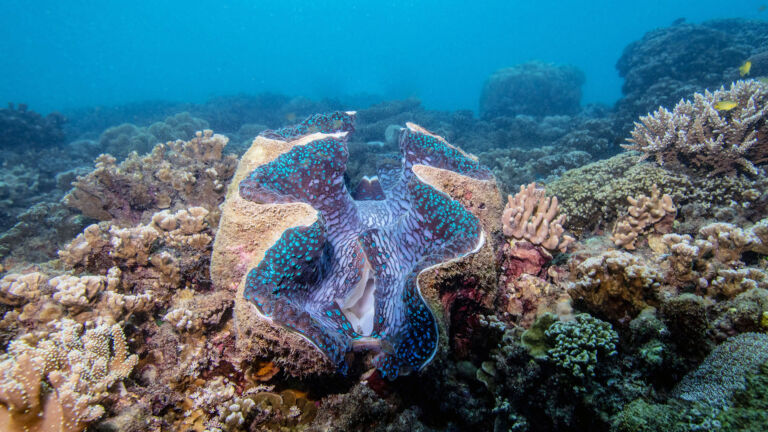
Giant Clam
The giant clam, the largest aquatic mollusc on Earth weighing up to 200 kilograms and over a metre long. These organisms, which may be found all throughout the Great Barrier Reef, have two hard shells that protect soft tissue within that filters nutrients from seawater. Giant Clams are the only invertebrate listed among the Great 8 species, and can live over 100 years!
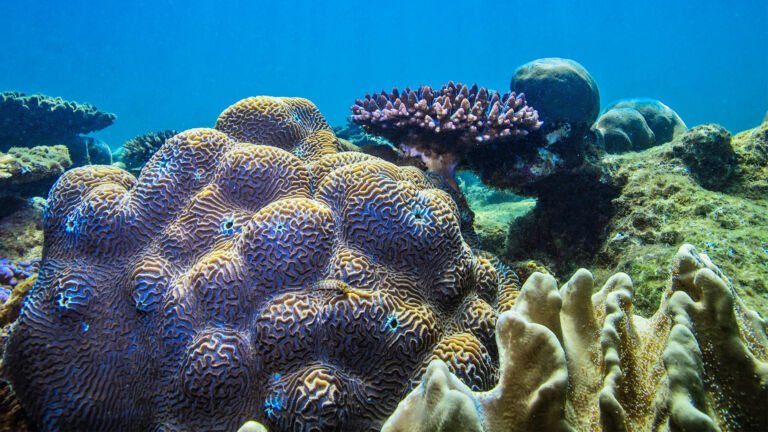
Coral
Coral may look like a rock or plant, but it’s actually a type of animal! Coral is made up of tiny but mighty coral polyps. Each polyp is typically a couple of millimetres in diameter and is closely related to sea anemones and jellyfish.
As the polyps grow, they secrete calcium carbonate, also known as limestone, forming a hard skeleton, and building a coral reef structure.
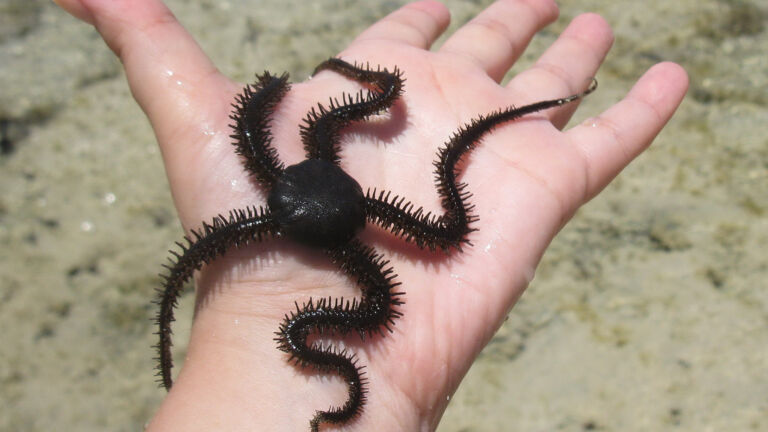
Brittle Stars
Brittle stars may look like starfish, but they’re not! Although brittle stars and starfish are closely related, as they’re both echinoderms, they are different species.
Each brittle star has a distinct central disk and five skinny, flexible arms. The central disk is made up of calcium carbonate and contains all their internal organs. If in danger, brittle stars can ‘drop’ one or more arms to escape predators. As long as a brittle star has its central disk, it can function and regenerate any lost limbs.
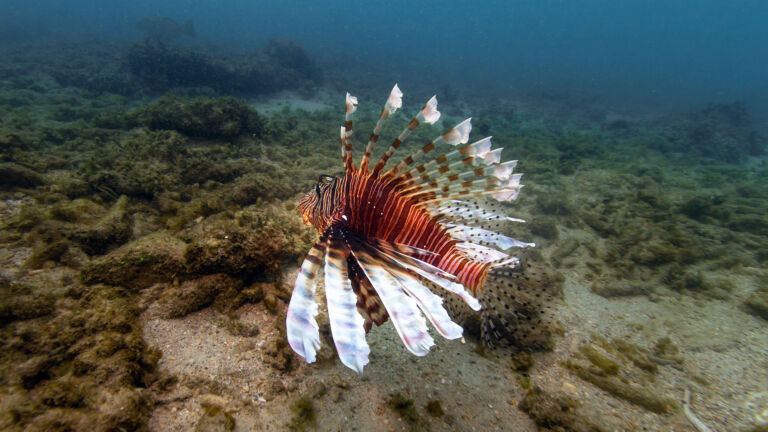
Red Lionfish
The gorgeous Lionfish are native to the Great Barrier Reef. The 13 long fins that extend from their spine are venomous and used to deter predators. To humans, a lionfish sting is painful but fortunately, while unpleasant, is not fatal.
Unfortunately, Lionfish have become an invasive species in North American waters, likely due to irresponsible aquarium owners releasing them directly into the Atlantic Ocean.
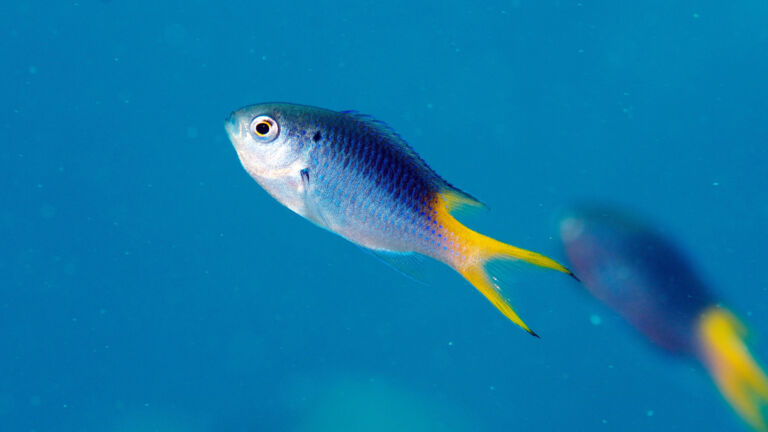
Damselfish
You’re definitely going to see Damselfish at Frankland Islands – they’re everywhere! Damselfish are plankton feeders. They have extendable mouths that shoot out to catch food. They stay close to the coral and are often in schools so they can spot predators and hide in the corals.
Wherever you see damselfish, you may see the predator fish that want to eat them… Sitting very still and camouflaged, waiting patiently.
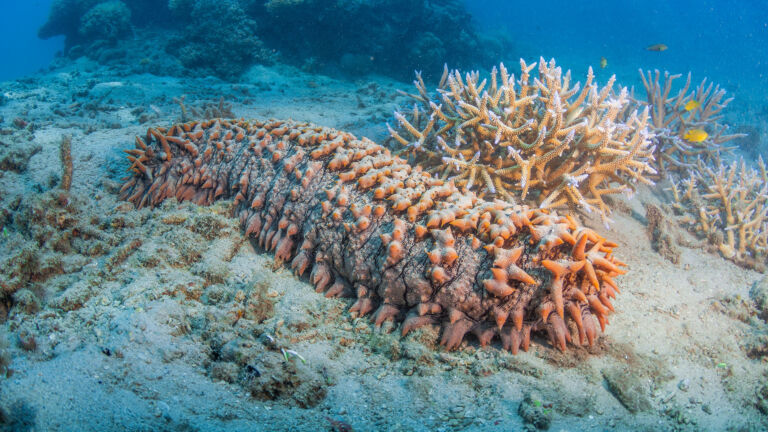
Sea Cucumbers
There are about 1,500 species of sea cucumbers that come in a variety of colours, shapes, and sizes. They can be from less than an inch to several feet in length. Sea cucumbers are echinoderms, meaning they are related to starfish, sea urchins, and sand dollars.
Sea cucumbers have a surprising defence mechanism, where they expel their internal organs if they feel threatened. This process is called evisceration, and once the organs are discharged, the sea cucumber can regenerate them.